
When choosing an aesthetic clinic in Busan, what you should look at first isn’t the interior design or discounts. Having the qualification of a dermatology specialist doctor in South Korea (marked with a red label) is something only about 2% of doctors in the country possess. The First Daewon branch has 4 such doctors.
I. I read over a dozen review articles, but I still don’t know how to make a choice.
Those who do their homework before starting usually get stuck at the same point: every article lists a different price, and every clinic claims to be the most professional.
Some reviews only say “very cheap and worth it,” without mentioning who performed the procedure for them. Some photos are beautifully taken, but it’s unclear whether the doctor actually sat down to examine their face.
With so many cosmetic clinics in Busan, there’s really only one thing that matters in the end: whether the doctor treating you understands skin care.
II. The red mark is not a marketing term—it’s a verifiable license.
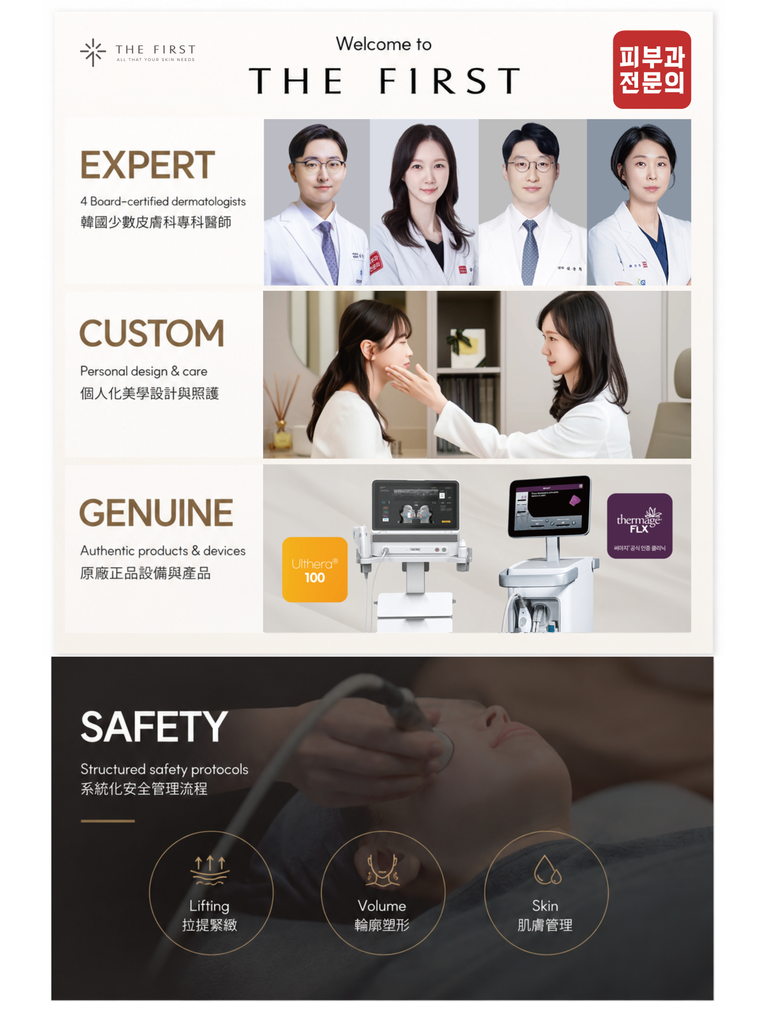
1. The specialist doctor system in South Korea is harder to obtain than you might think.
What Taiwanese readers are familiar with as “specialist doctors” corresponds in South Korea to Dermatology specialists. The difference lies in the entry requirements: far fewer doctors earn this certification, with only about 2% of physicians in South Korea holding it.
In other words, it’s not hard for a clinic to put “Dermatology” on its sign—it’s the doctor himself who needs to hold that certification. This has nothing to do with the size of the clinic, but rather with who is sitting across from you. There are many promotional claims in South Korea’s medical aesthetics industry, but this is the only qualification that can actually be verified.
2. Knowing how to operate the equipment and understanding skin are two different things.
Operating machines that use sound waves, radio waves, or lasers is something you can learn quickly. Just like driving, most people can get on the road; but the difference between a race car driver and an ordinary driver lies in judgment — knowing when to press the pedal and when to release it.
The same goes for the energy delivered to the face. With 600 shots in total, decisions such as which layer or area to target, which areas to skip, and whether to pause if redness occurs depend on the therapist’s training and experience—not the specifications of the machine.
This is why “choosing a doctor” is more practical than “choosing a machine.”
III. Four board-certified doctors on hand — the difference lies in those 20 minutes of in-person consultation
The First Busan Daewon Branch is a Dermatology clinic located just 2 minutes’ walk from Exit 6 of Gyeongsung University·Pukyong National University Station on Busan Metro Line 2. It is staffed by 4 certified dermatologists from South Korea who conduct personal consultations and treatments, with a Chinese translator available throughout the process.
Upon entering the clinic, you’ll first go through registration, makeup removal, pre-procedure photos and skin testing, before having a face consultation.
This consultation is conducted one-on-one by the clinic director, not with an assistant asking questions first and the doctor stepping in to finalize things later. The director will first assess your skin condition, then ask what you’re most concerned about this time and what your budget is roughly, before determining the order of procedures—which treatments are worth doing now and which can wait for a future visit.
Not pushing sales might sound like basic courtesy, but it’s actually very difficult. That’s because most clinics face pressure to add extra services on the spot.
The approach here is to give them the choice back. Even if their budget is limited, they can sit down and discuss it, and they won’t be pressured to spend more after the conversation. If they only want to address one issue this time, they should just say so, and the clinic director will plan everything within that scope.
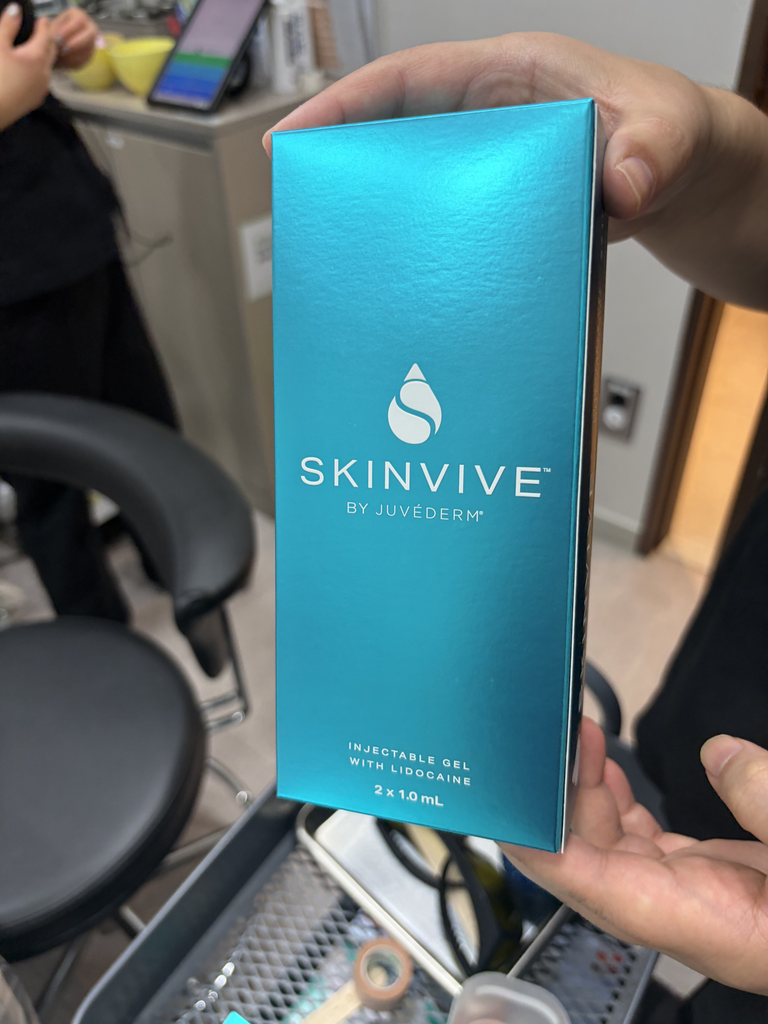
As for concerns about authenticity, the solution is straightforward: the equipment and probes are unsealed right before use, right in front of you, with the sealing film torn open. It’s like a restaurant opening a new bottle of wine at your table — you can hear the cap being unscrewed.
IV. Treatment Regimens and Price Ranges
The figures below are for reference only; the actual amount will depend on the in-person consultation and the number of treatments, subject to the clinic’s latest quote.
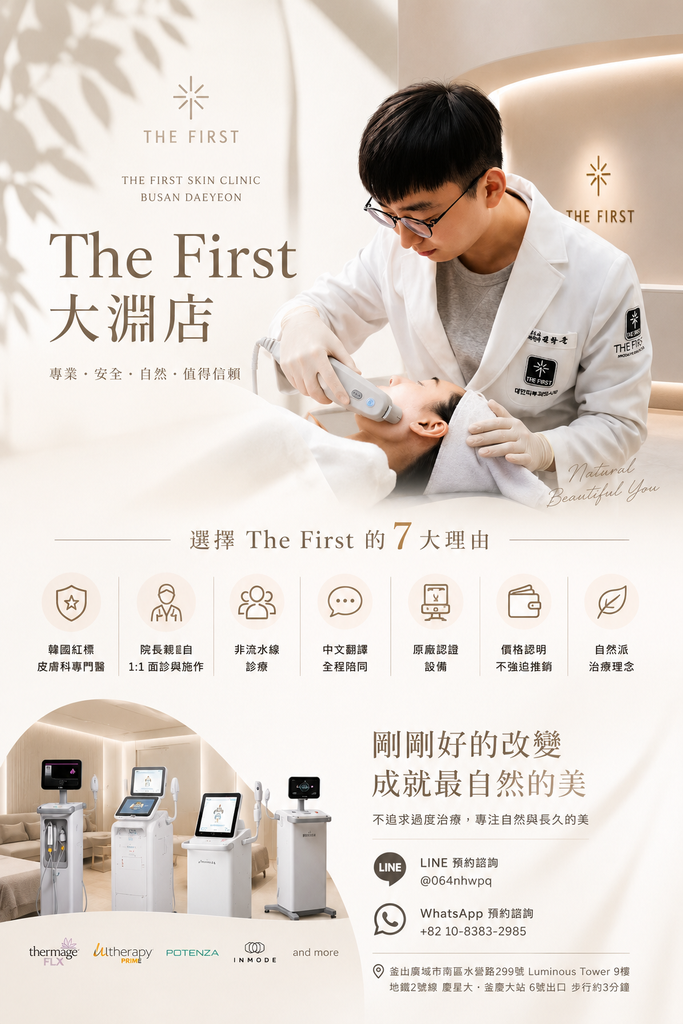
| Direction | Representative Equipment | Range Reference (Including Tax) |
| Deep lifting | Ultherapy Prime – The American Version of Ultrasound Therapy | 300 shots at around 1.46 million KRW / 600 shots at around 2.64 million KRW |
| Firming Collagen | Thermage FLX Radiofrequency | Full face: 600 sessions, approximately 2.5 million KRW |
| Heat Super Alliance | Radio waves: 600 shots + US version ultrasound: 300 shots | Approximately 3.83 million KRW |
| Pores and Acne-Prone Skin | Potenza Gold Micro-Needling / Agnes / Vbeam | Full-face treatment: 400,000–530,000 KRW per session |
| pigment spots | Combinations of Pico lasers/pulsed glow treatments | Starting from 150,000 KRW |
If you want to know which treatment is right for your skin type, filling out the form on the official website is the fastest way. Including a photo of yourself without makeup will help the clinic give you a more accurate recommendation.
V. Clinic Information and Booking Options
1. Location and operating hours
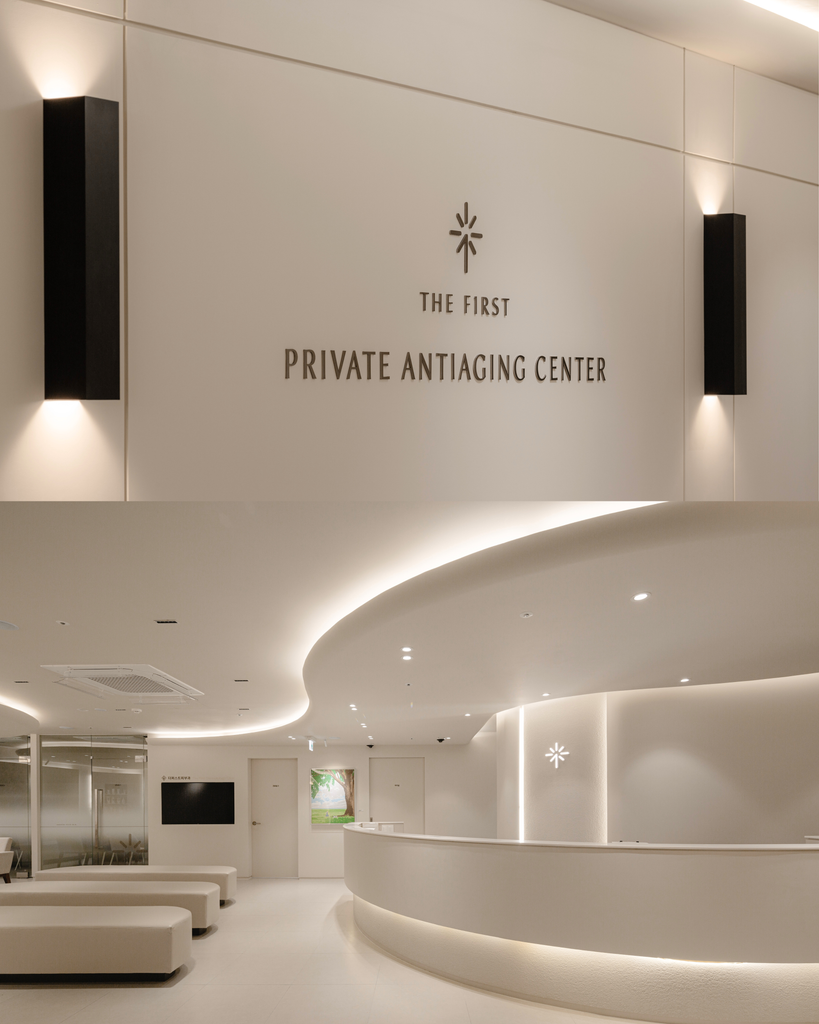
The address is 299 Suyeong-ro, Nam-gu, Busan. Check-in is available at the counter on the 9th floor. Exit No. 6 at Gyeongsung University·Pukyong National University Station on Subway Line 2, then walk straight for 2–3 minutes.
| Date | Business hours |
| Monday–Thursday | 10:00–19:00 (lunch break 13:00–14:00) |
| Friday | 10:00–20:00 |
| Saturday | 09:00–14:00 (no lunch break) |
| Sunday | Closed for appointments |
2. How to Book an Appointment
| Pipes | Information |
| Official website booking page | thefirst-clinic.com |
| LINE | @064nhwpq |
| +82 10-8383-2985 |
A deposit of 20,000 KRW will be applied toward the total cost of the treatment upon arrival at the clinic.
VI. Frequently Asked Questions
Q1: Where can I check my red badge eligibility?
Ask in person or check the doctor’s profile available at the clinic. In South Korea, a Dermatology specialist is a formally recognized professional title, not just a self-proclaimed label by the clinic.
Q2: Is there a difference in performance between specialists and general practitioners?
The difference lies in judgment. The number of sessions, depth of treatment, treatment area, and stop-loss points are all determined by the doctor—these decisions have a greater impact on the results and recovery time than the type of machine used.
Q3: How long does a in-person consultation usually take?
This includes check-in, makeup removal, skin assessment, and a consultation with the clinic director — planning for 40–60 minutes is a safe estimate. If you want the procedure done on the same day, allocate 2–3 hours in total.
Q4: Will I be bombarded with sales pitches?
There’s no pressure to add extra procedures. The clinic director will first ask about your budget, then prioritize treatments based on that amount—you can choose to have just one procedure done.
Q5: Is the price inclusive of tax? Do I need to pay an additional fee for the doctor?
All prices on the price list include tax, and there is no additional fee for the procedure performed personally by the clinic director.
Q6: Do I need to make a reservation in advance?
It’s recommended to make an appointment. Fill out the online form with your desired treatment plan—the reservation fee will be fully credited upon arrival at the clinic, and it can be adjusted after a face consultation.
Q7: What if I don’t know Korean?
From the initial consultation and discussion to the procedure itself, a Chinese translator is available throughout, and post-operative care instructions are also provided in Chinese.
VII. Recommendations from Shunyou
The clinic is located on Line 2 of the subway. Try not to schedule too many things for the half day after your treatment.
The Gyeongseong-da shopping area offers cafes and affordable meals, making it perfect for killing time while waiting. If you want to shop, take two stops to Seomyeon or head straight to Centum City for a more thorough shopping experience. Avoid the beach and saunas on the same day, and schedule them for another day instead.
VIII. Postoperative Care
- Sun protection: In the days following the treatment, rely mainly on physical barriers—hats, masks, and umbrellas are far more effective than sunscreen.
- Moisturization: Use moisturizers with simple ingredients; pause using acids and exfoliants for a week.
- High-temperature treatments: Sauna, hot springs, and high-temperature yoga will be suspended for a period determined by the clinic director’s recommendation.
- Makeup: Depending on the treatment plan, light makeup can usually be applied the day after; check with the clinic for the exact timing before leaving.
- Abnormal reactions: Persistent redness or blisters—contact the clinic immediately via LINE.
When it comes to choosing a clinic, it ultimately boils down to a very simple question: Has the person who will examine you taken the time to properly look at your face?
If the answer is no, no price is good enough to make it worthwhile. Getting beautiful deserves proper planning—list out all your questions first before deciding whether to fly or not.
On the official website’s booking page, just fill out a form with your travel dates, and the clinic will get back to you with suitable time slots and preliminary suggestions.